
The drying silo at Riuttamäki farm
The Riuttamäki farm in Huittinen was the first in Finland to introduce the Antti drying silo. Juho Riuttamäki manages an operation consisting of four farms.
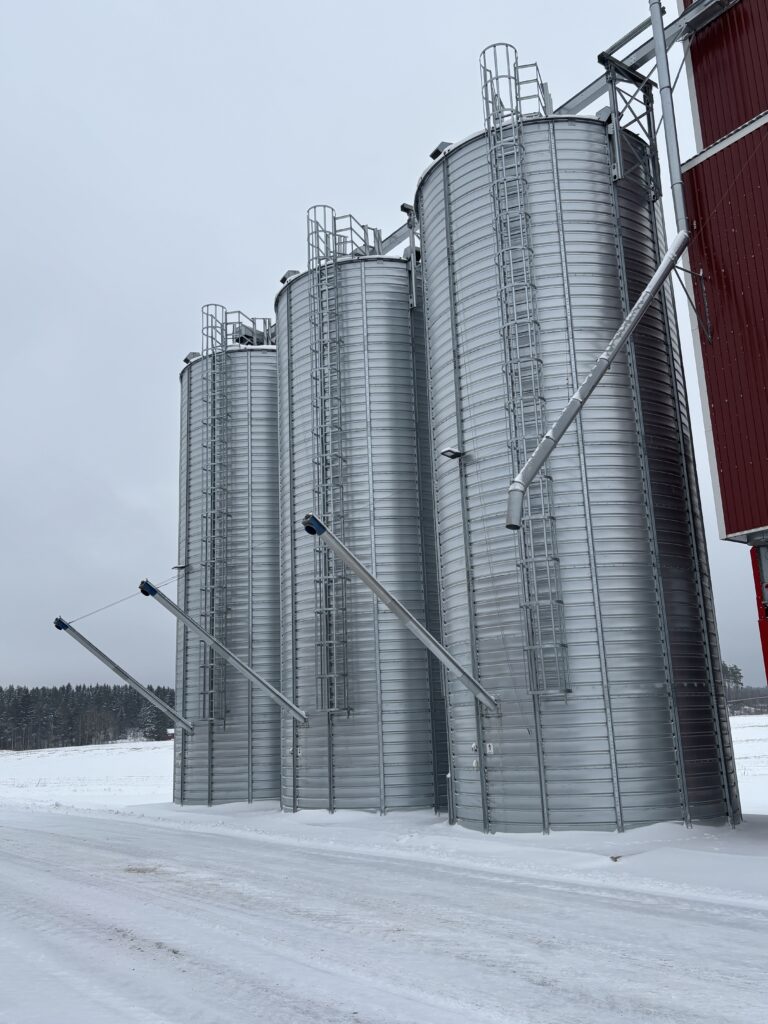
Read moreNew building, 65MF3 (63.5 m³), Skandia 3*10m tipping hopper with KTG conveyor 60tn/h, silos 3* D5.3 (268 m³/each), Skandia KTI conveyor 60tn/h, 8” Jussi grain augers, Optima 2.0 control centre, water-air bioheater with glycol circulation. Entrepreneurs Teemu Vesa and Juho Urkko
The Kukkopojat agricultural cooperative, which grows grain in Sahalahti, Kangasala, invested in a new grain dryer in 2023. The decision had been maturing for several years, as the farm’s cultivated area had grown steadily and the old dryers had been kept running gradually. The grain was dried using a 190hl Jaakko rental dryer and farm’s own Antti dryer of the same size. Both dryers used oil as energy source, but the drying season involved a lot of work and several dozen batches were processed in each dryer. In addition, controlling and monitoring the dryers always required on-site visits, and even though the distances were reasonable, it took up a lot of working time and attention from other tasks.
The decision to proceed with the investment was ultimately made in a relatively short period of time. Although grain and production input prices fluctuated wildly, cost trends looked favourable, and the Ministry of Agriculture and Forestry confirmed the new reference costs for agricultural investment subsidy at the beginning of 2023. For the first time in a long time, the reference costs used as the basis for investment subsidy were at least close to the actual cost level. The first meeting regarding the project took place around Christmas with Antti’s sales manager, Vesa Kaipainen. Teemu already had a preliminary plan for the location and technology of the dryer, on the basis of which several different draft designs were made during the month until the final form was decided upon. At the same time, the building permit application and other documents required for investment support were being prepared, and we waited for investment application portal to open.
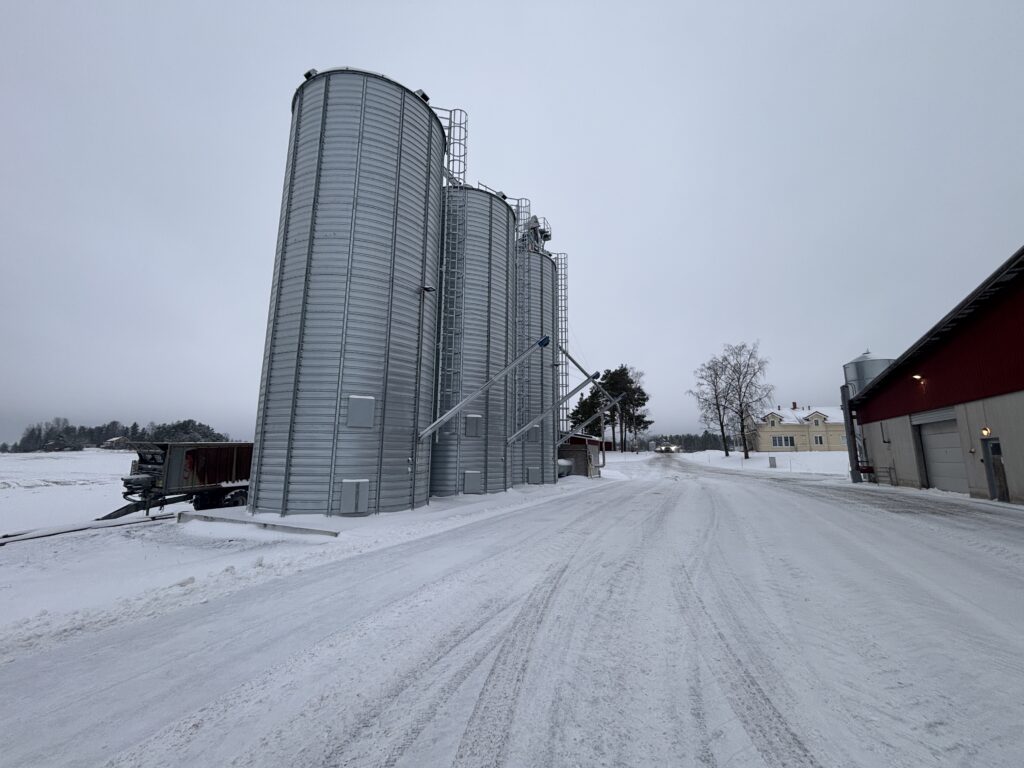
A few ideas were discussed regarding the project; an overridableintake option was considered; for the silos, the choice between two 7.5‑metre silos or three smaller D5,3m ones was weighed up. However, a reversible model was ultimately chosen for the intake hopper, as the project was located on flat ground and a drive-over hopper would have required the construction of large ramps or the digging of a deep hole in the ground. For the silos, the decision was made to use several smaller ones, as the farm typically grows 3–4 different types of grain, so with the old dryer also serving as a grain storage facility, more silos were needed to handle the different types. The additional 800 m³ of capacity also made it possible to store almost an entire year’s harvest in the farm’s silos, whereas previously, significant amounts had to be sold immediately after threshing in order to make room on the farm.
The construction site was located close to the farm’s heating centre, which meant that the heating ducts for the 1.3 MW radiator could be installed with minimal effort. Although the existing heating plant was unable to produce all the energy required, it did result in significant savings in oil consumption. The choice of construction site also made it easier to sell grain, as the loading area is easily accessible.
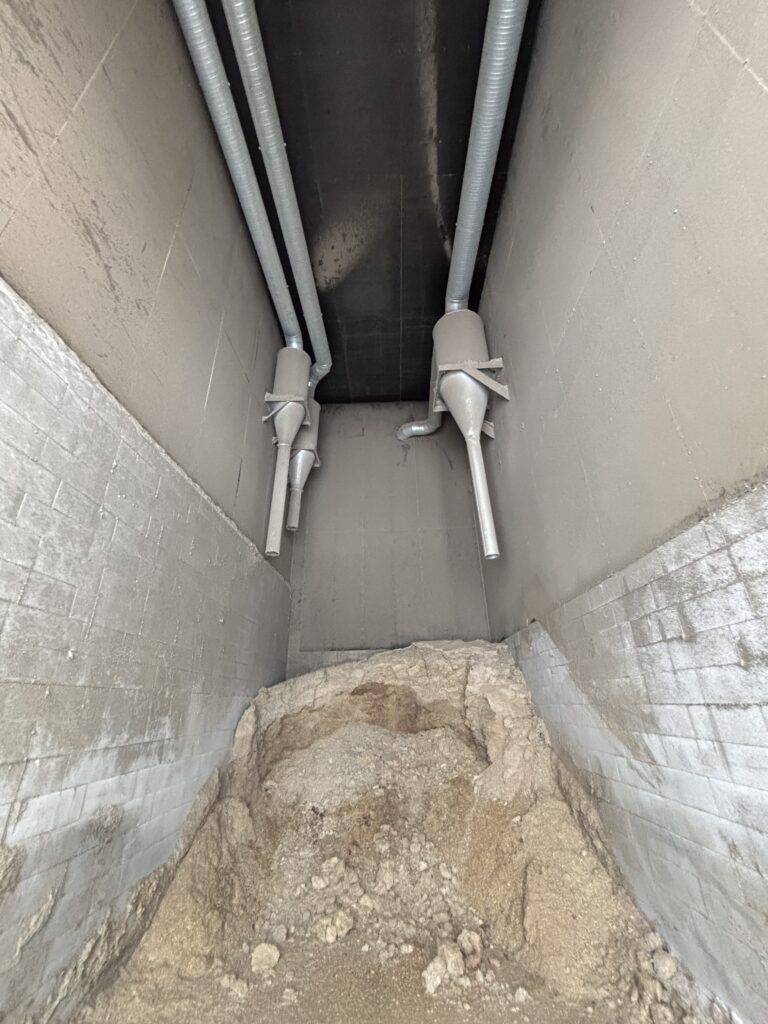
Teemu’s broiler farms are also located in the immediate vicinity of the building. For this reason, the dryer was equipped with Dustex dust separation cyclones, and a large storage silo was built behind the hopper for pre-cleaning waste, from which the accumulated mass can be easily transferred to the wood chips for burning.
The project was implemented quickly, with earthworks commencing at the end of April and commissioning inspections completed in mid-August. Two-thirds of the autumn harvest was dried in the new dryer.
In terms of energy, oil consumption has decreased significantly, and now, with the new heating plant, almost all energy needs will be covered by renewable energy sources. Only when high temperatures above 80°C are required is additional heat taken from the oil boiler.
Optima 2.0 completely changed drying control – remote monitoring makes it easy to check what is happening in the dryer even at night. In the initial phase of the project, the adjustment of the wood chip boiler and pumps was not included, but when the bioheater is renewed, the heat supply can also be controlled via Optima.
In terms of its basic principles, the project has met the expectations set for it and responds well to the needs of the facility. With regard to the silo solution, larger D7.5m silos of the same height would offer significantly more storage capacity. Although it seemed that there would be plenty of new storage space when the building was constructed, there is never too much, especially if the facility’s operations continue to expand. The design already took expansion possibilities into account so that additional capacity can be easily added when needed.
The Optima 2.0 control centre has brought the long-awaited automation to grain drying. The Ultima control centre would also have allowed adjustments to be made to the control of the bioheat boiler and pumps. The old wood chip heating centre will be replaced with a new one in the summer of 2026, at which point bioheat control will be handled through the wood chip heating control centre.
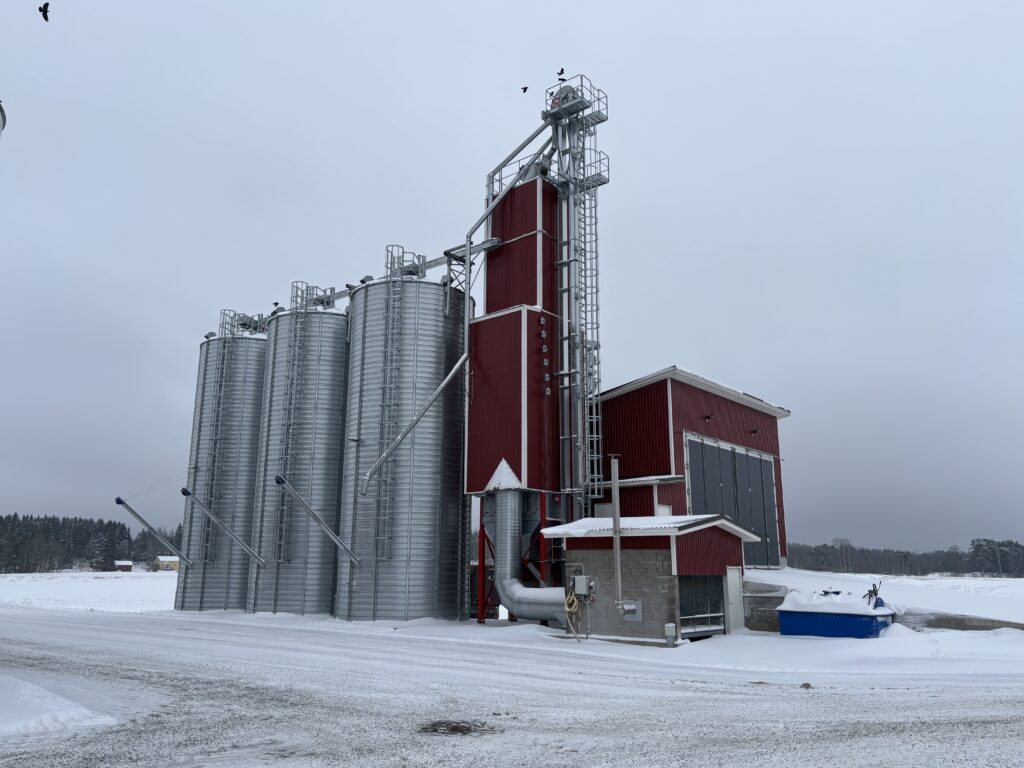
The Riuttamäki farm in Huittinen was the first in Finland to introduce the Antti drying silo. Juho Riuttamäki manages an operation consisting of four farms.
Read moreA premiere in Germany: As the first customer in Germany, Andermann farm in Haßbergen, located in the Nienburg/Weser district, chose Antti’s X-Series. The farm’s own compact grain drying plant offers numerous advantages. In addition to economic benefits, greater independence from grain traders has proven to be a significant gain for the Andermann family.
Read moreWhen it came time to purchase a new dryer in 2018, farmer Arto Hyytiäinen opted for a gas oven due to its superior efficiency and cost-effectiveness.
Read more